Book Appointment Health Check-ups Lab Reports Home Sample Collection

Study Overview : e-SAATHI

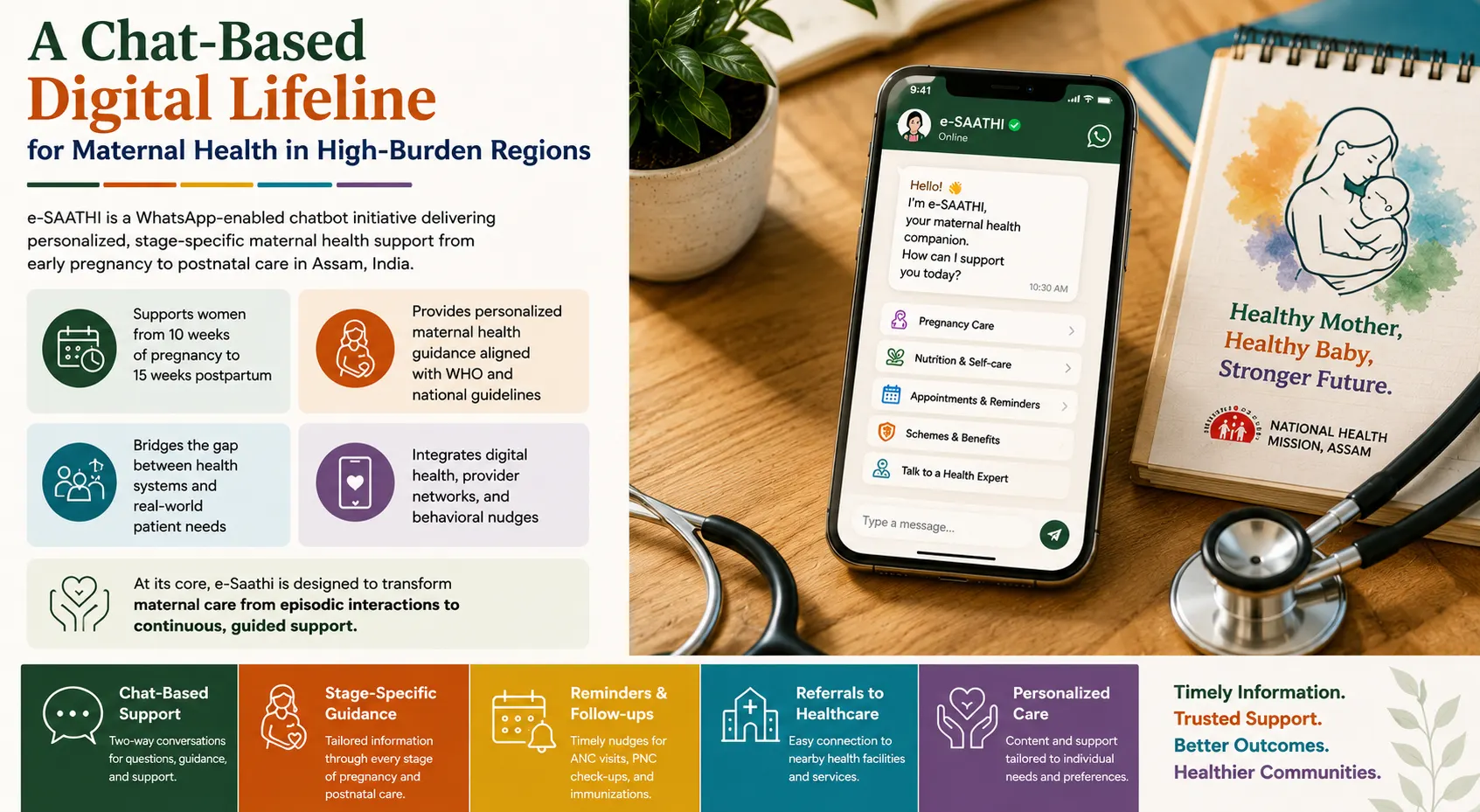
A Chat-Based Digital Lifeline for Maternal Health in High-Burden Regions

The e-SAATHI (Strengthening ANC/PNC via AskNivi) initiative is a chat-based maternal health intervention designed to improve access to timely, personalized care for pregnant and postnatal women in Assam, India. Built on a WhatsApp-enabled chatbot platform, the program delivers stage-specific health information, reminders and referrals from early pregnancy through the postnatal period.

  • Supports women from 10 weeks of pregnancy to 15 weeks postpartum
  • Provides personalized maternal health guidance aligned with WHO and national guidelines
  • Bridges the gap between health systems and real-world patient needs
  • Integrates digital health, provider networks, and behavioral nudges

At its core, e-Saathi is designed to transform maternal care from episodic interactions to continuous, guided support.
SACMIND Study Overview Infographic

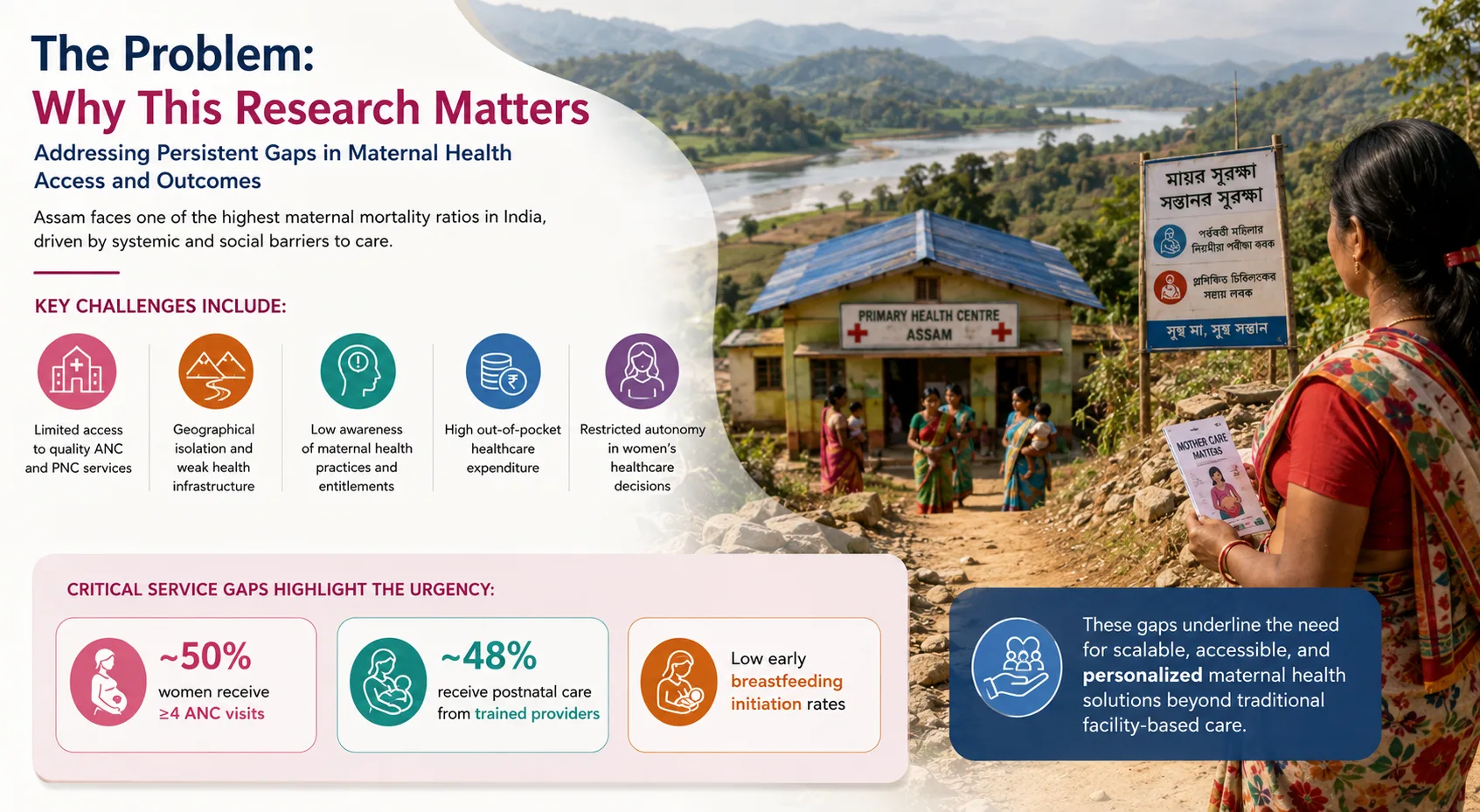
The Problem

Addressing Persistent Gaps in Maternal Health Access and Outcomes

img

Assam faces one of the highest maternal mortality ratios in India, driven by systemic and social barriers to care.

Key challenges include:

  • Limited access to quality ANC and PNC services
  • Geographical isolation and weak health infrastructure
  • Low awareness of maternal health practices and entitlements
  • High out-of-pocket healthcare expenditure
  • Restricted autonomy in women’s healthcare decisions

Critical service gaps highlight the urgency:

  • Only ~50% women receive ≥4 ANC visits
  • ~48% receive postnatal care from trained providers
  • Low early breastfeeding initiation rates

These gaps underline the need for scalable, accessible, and personalized maternal health solutions beyond traditional facility-based care.

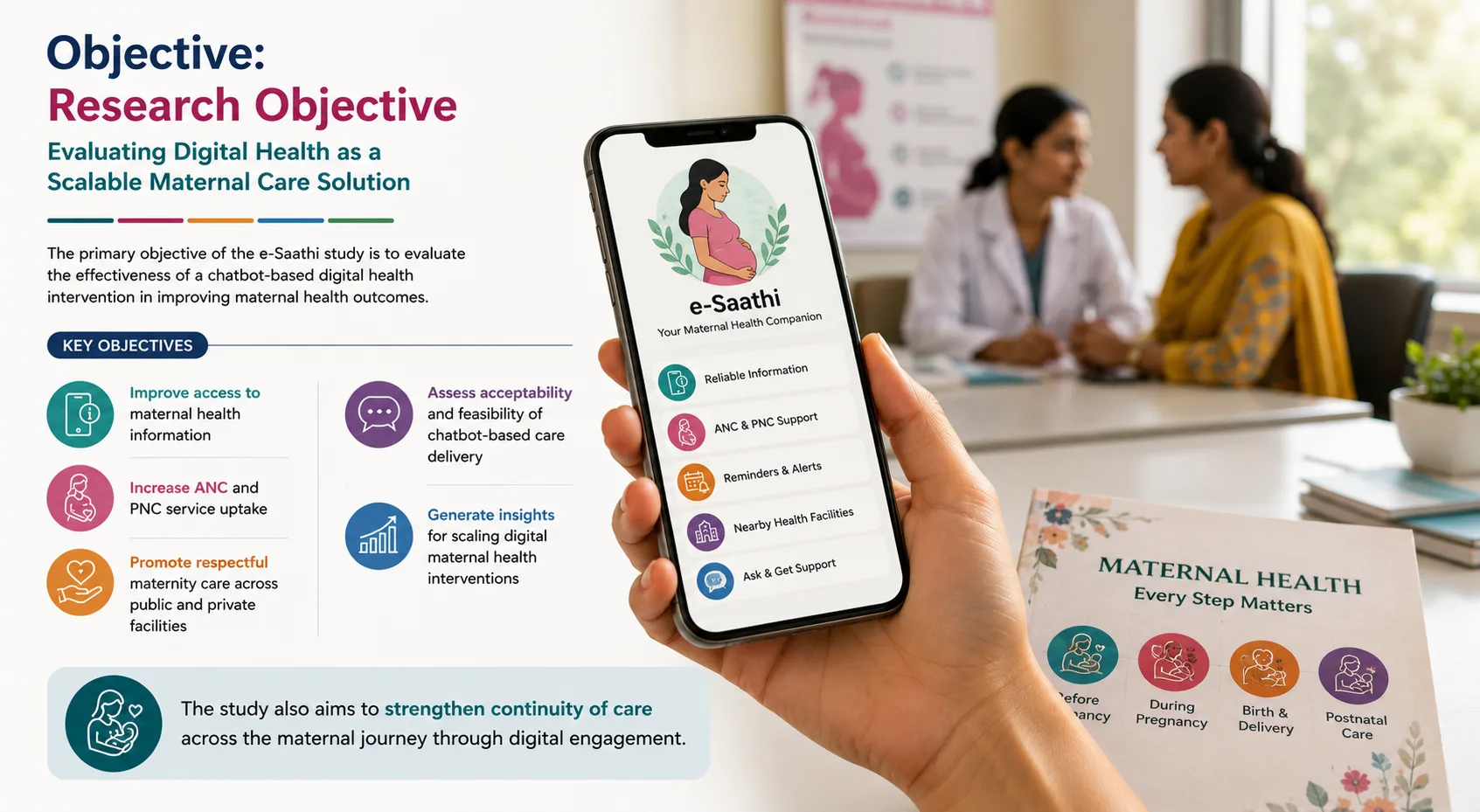
Objective

Evaluating Digital Health as a Scalable Maternal Care Solution

The primary objective of the e-Saathi study is to evaluate the effectiveness of a chatbot-based digital health intervention in improving maternal health outcomes.

Key objectives:

  • Improve access to maternal health information
  • Increase ANC and PNC service uptake
  • Promote respectful maternity care across public and private facilities
  • Assess acceptability and feasibility of chatbot-based care delivery
  • Generate insights for scaling digital maternal health interventions

The study also aims to strengthen continuity of care across the maternal journey through digital engagement.
Study Design and Methodology

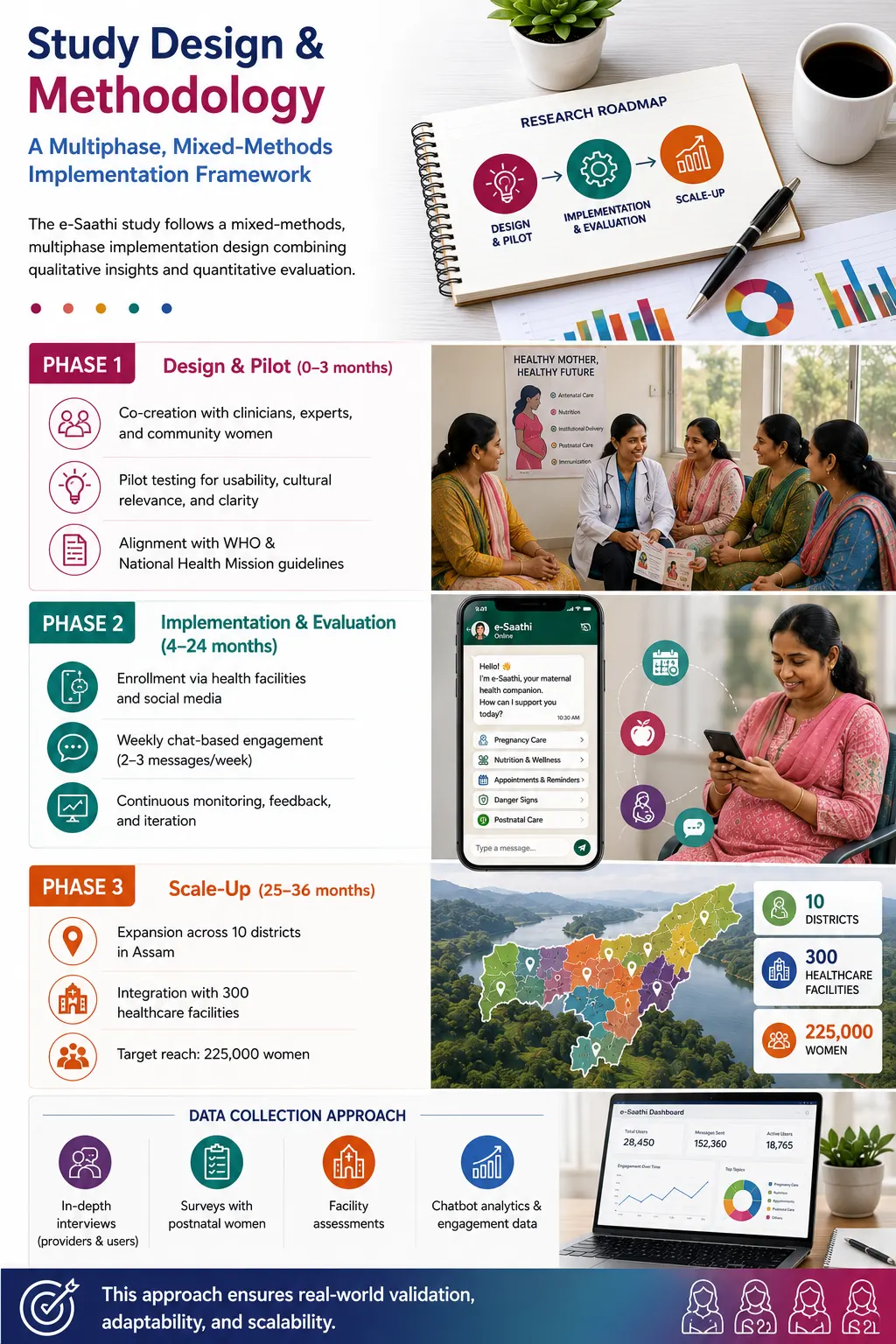
Study Design

A Multiphase, Mixed-Methods Implementation Framework

The e-Saathi study follows a mixed-methods, multiphase implementation design combining qualitative insights and quantitative evaluation.

01

Phase 1: Design & Pilot (0–3 months)

  • Co-creation with clinicians, experts, and community women
  • Pilot testing for usability, cultural relevance, and clarity
  • Alignment with WHO & National Health Mission guidelines
02

Phase 2: Implementation & Evaluation (4–24 months)

  • Enrollment via health facilities and social media
  • Weekly chat-based engagement (2–3 messages/week)
  • Continuous monitoring, feedback, and iteration
03

Phase 3: Scale-Up (25–36 months)

  • Expansion across 10 districts in Assam
  • Integration with 300 healthcare facilities
  • Target reach: 225,000 women
04

Data Collection Approach

  • In-depth interviews (providers & users)
  • Surveys with postnatal women
  • Facility assessments
  • Chatbot analytics & engagement data

This approach ensures real-world validation, adaptability, and scalability.

Intervention:

The e-Saathi intervention is powered by the AskNivi chatbot, delivering:

  • Stage-specific health messages (pregnancy → postnatal)
  • Visit reminders for ANC & PNC
  • Referrals to nearby healthcare providers
  • Two-way engagement for queries and feedback

Key features:

  • Weekly personalized messaging
  • Integration with public and private providers
  • Support for self-care, nutrition, and newborn care
  • Reinforcement of timely care-seeking behaviors

Outcome Measures:

  • Primary Outcome

    • Change in composite quality score of maternal and newborn care
  • Secondary Outcomes

    • Increase in ANC visits and PNC follow-ups
    • Improvement in facility-based delivery rates
    • Enhanced maternal health knowledge & self-care practices
    • Patient satisfaction and care experience
  • Additional Metrics

    • Chatbot engagement and usage patterns
    • Provider integration and system adoption
    • Barriers like digital literacy and connectivity

Key Findings

Digital Engagement Drives Maternal Health Behavior Change

While final outcomes are ongoing, early progress and global evidence suggest strong potential impact:

  • Increased engagement with maternal health services
  • Improved knowledge and self-care practices
  • Higher likelihood of facility-based care and follow-ups
  • Enhanced patient satisfaction and perceived care quality

Progress indicators:

  • 200,000+ women enrolled
  • 210+ facilities onboarded

These findings reinforce the role of digital health platforms in improving care-seeking behavior and service utilization.
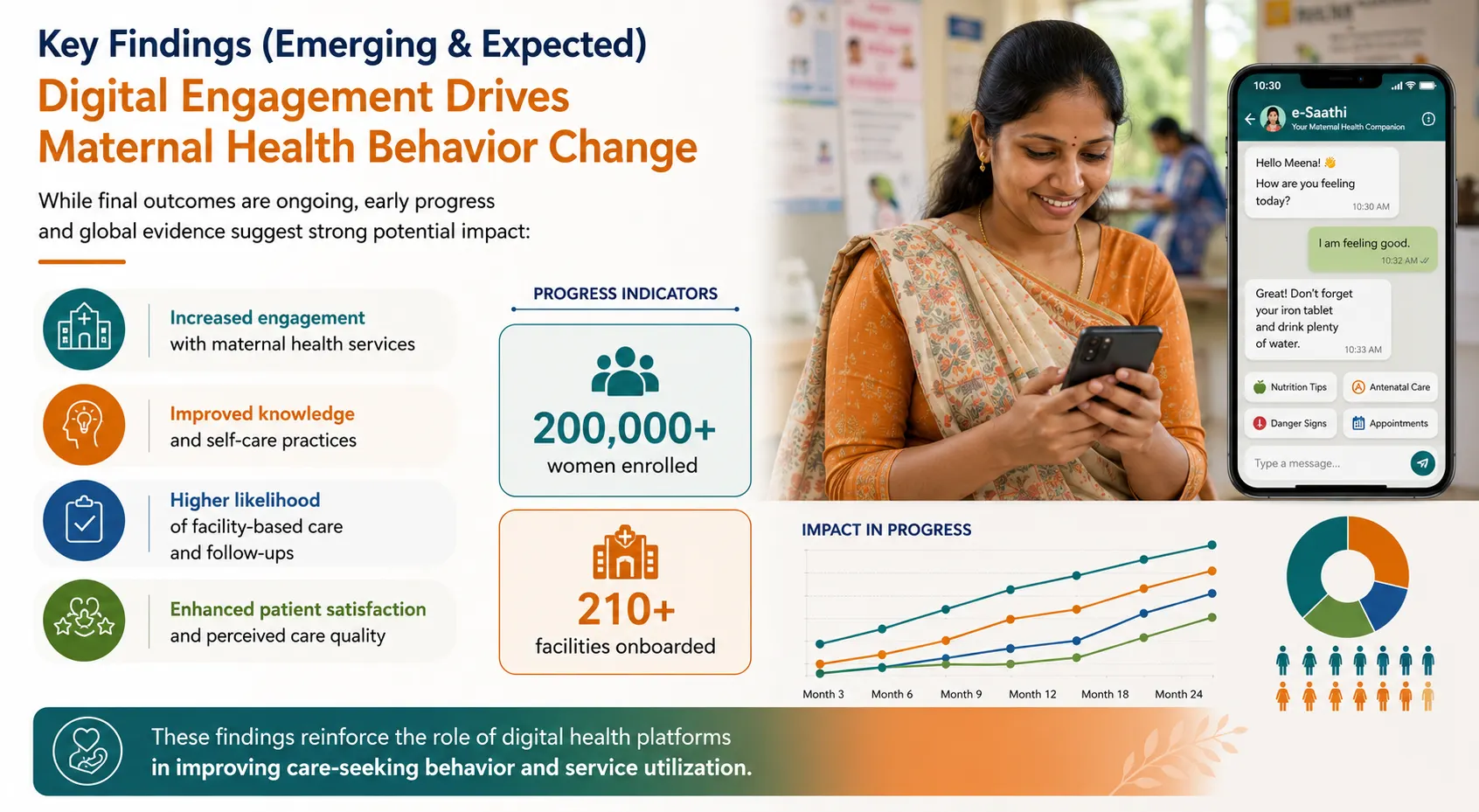
Key Findings Infographic
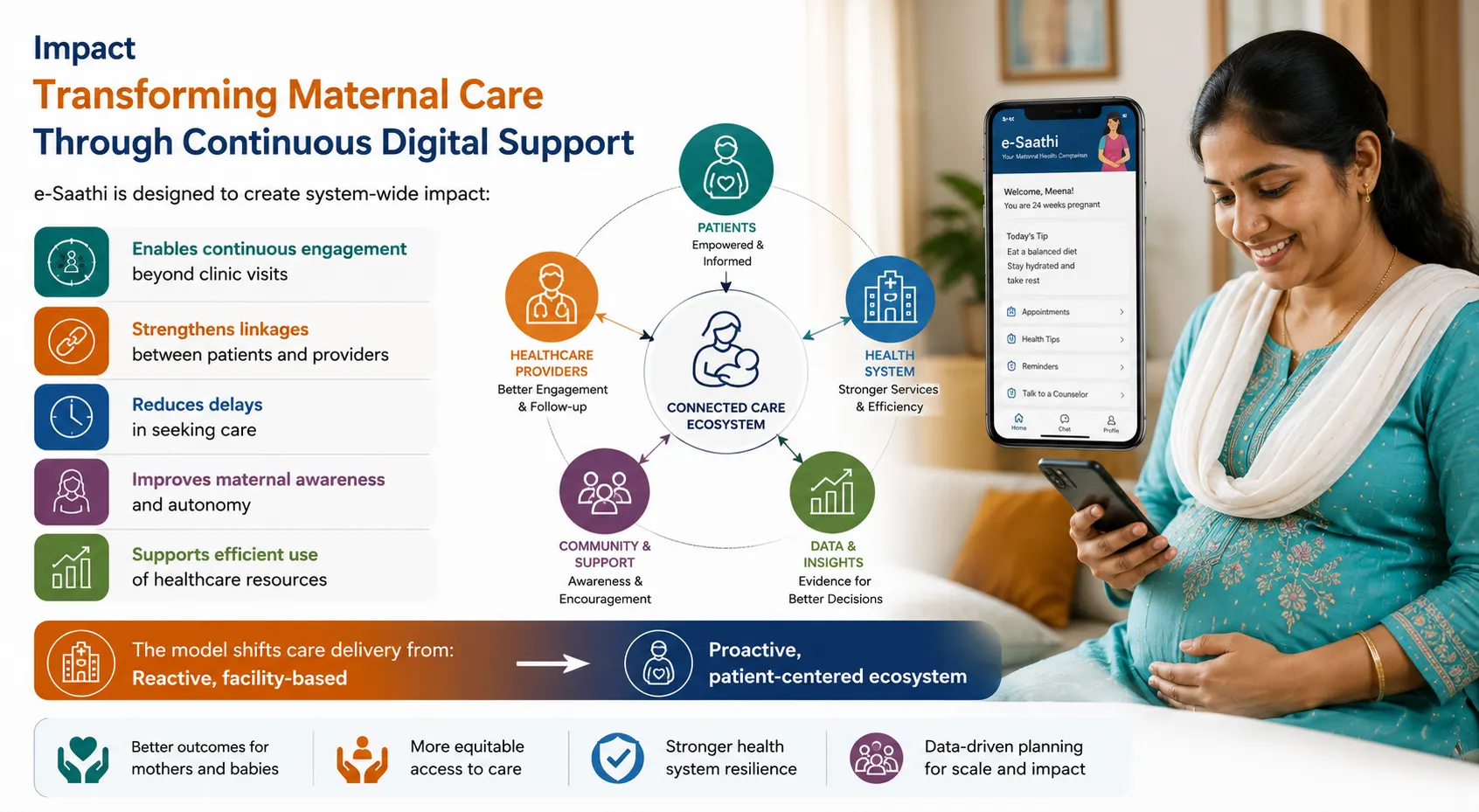
Real-World Impact Infographic

Impact

Transforming Maternal Care Through Continuous Digital Support

e-Saathi is designed to create system-wide impact:

  • Enables continuous engagement beyond clinic visits
  • Strengthens linkages between patients and providers
  • Reduces delays in seeking care
  • Improves maternal awareness and autonomy
  • Supports efficient use of healthcare resources

The model shifts care delivery from:

Reactive, facility-based → Proactive, patient-centered ecosystem

Highlight

A Scalable Digital Bridge Between Women and Maternal Health Systems

Global Significance

A Replicable Model for Maternal Health in LMICs

The e-Saathi model holds strong global relevance

01

Applicable across low- and middle-income countries (LMICs)

02

Aligns with WHO priorities on maternal health and digital care

03

Demonstrates task-shifting via digital tools

04

Integrates technology with public health systems

It contributes to reducing maternal mortality, improving care equity and scaling digital health interventions globally.
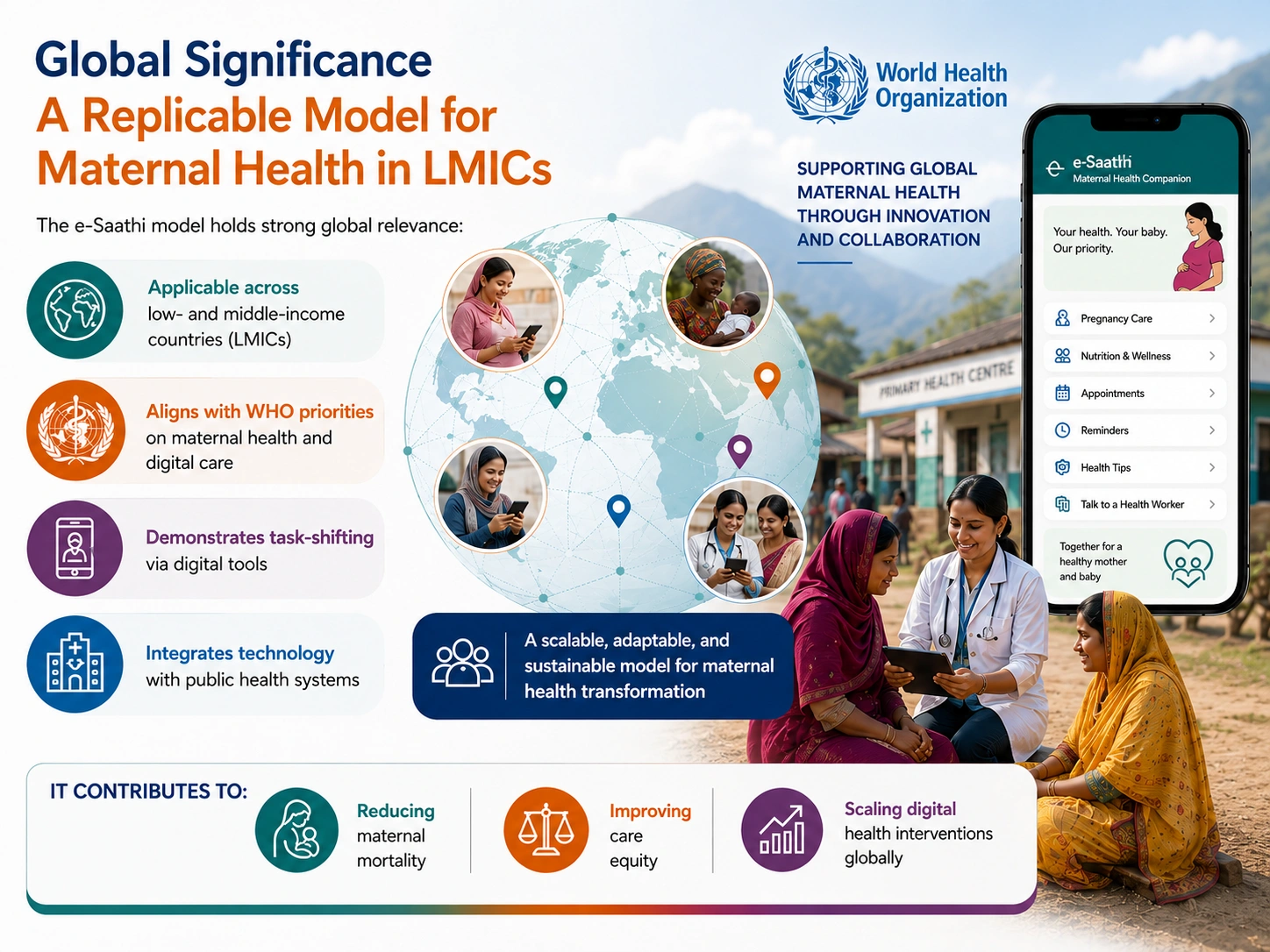
Why This Study is Globally Relevant
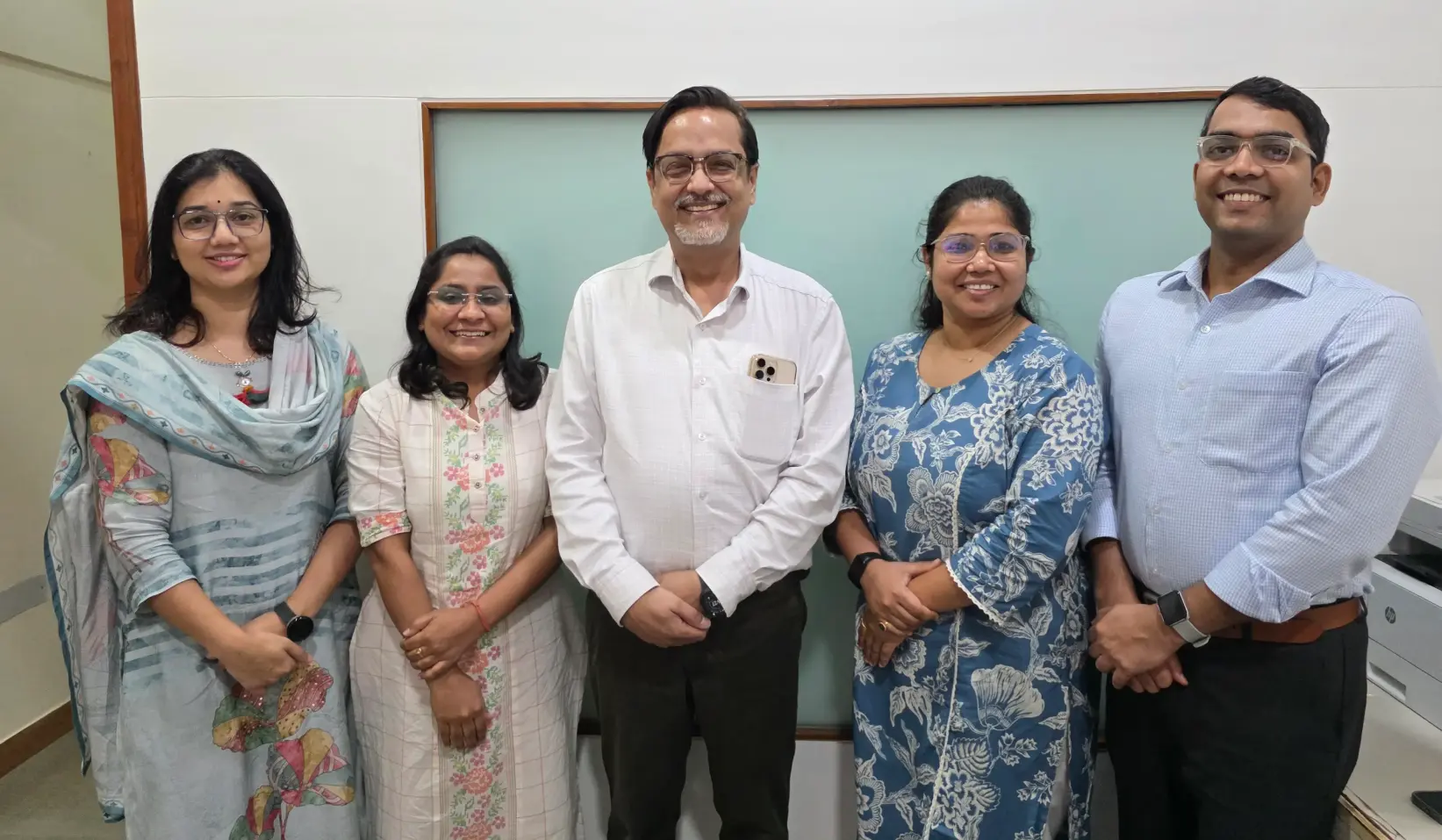
SACMIND Research Team
About The Research Team

A Multi-Institutional Collaboration for Public Health Innovation

The e-Saathi initiative is led by a global and multidisciplinary consortium, including:

  • Population Council Consulting Pvt. Ltd.
  • Sitaram Bhartia Institute of Science and Research (SBISR)
  • Nivi Inc. (Digital Health Platform)
  • MSD for Mothers Initiative
  • Public health and academic collaborators

The team combines expertise in:

  • Maternal health
  • Digital health innovation
  • Behavioral science
  • Public health implementation
Publication Authority

Published in JMIR Research Protocols (2026)

JMIR Research Protocols (2026)

Chat-Based Decision Support System for the Maternal Health Journey in Assam, India

  • Peer-reviewed international journal
  • DOI-backed scientific publication
  • Focus on digital health, implementation science, and global health systems
JMIR Research Protocols Journal

Be Part of Scalable, Impact-Driven Health Innovation

We welcome collaborations with:

  • Research institutions
  • Public health organisations
  • Funding partners
  • Policy-makers

Collaborate with us to design, scale, and evaluate digital health solutions that transform maternal and child health outcomes across communities and geographies.

Chat with us