
Bridging the Gap Between Cost and
Care in Diabetes Management
Evidence from Real-World Data to Inform Equitable and Affordable Health Systems
Scroll
Evidence from Real-World Data to Inform Equitable and Affordable Health Systems
Study Overview : DEDICOM
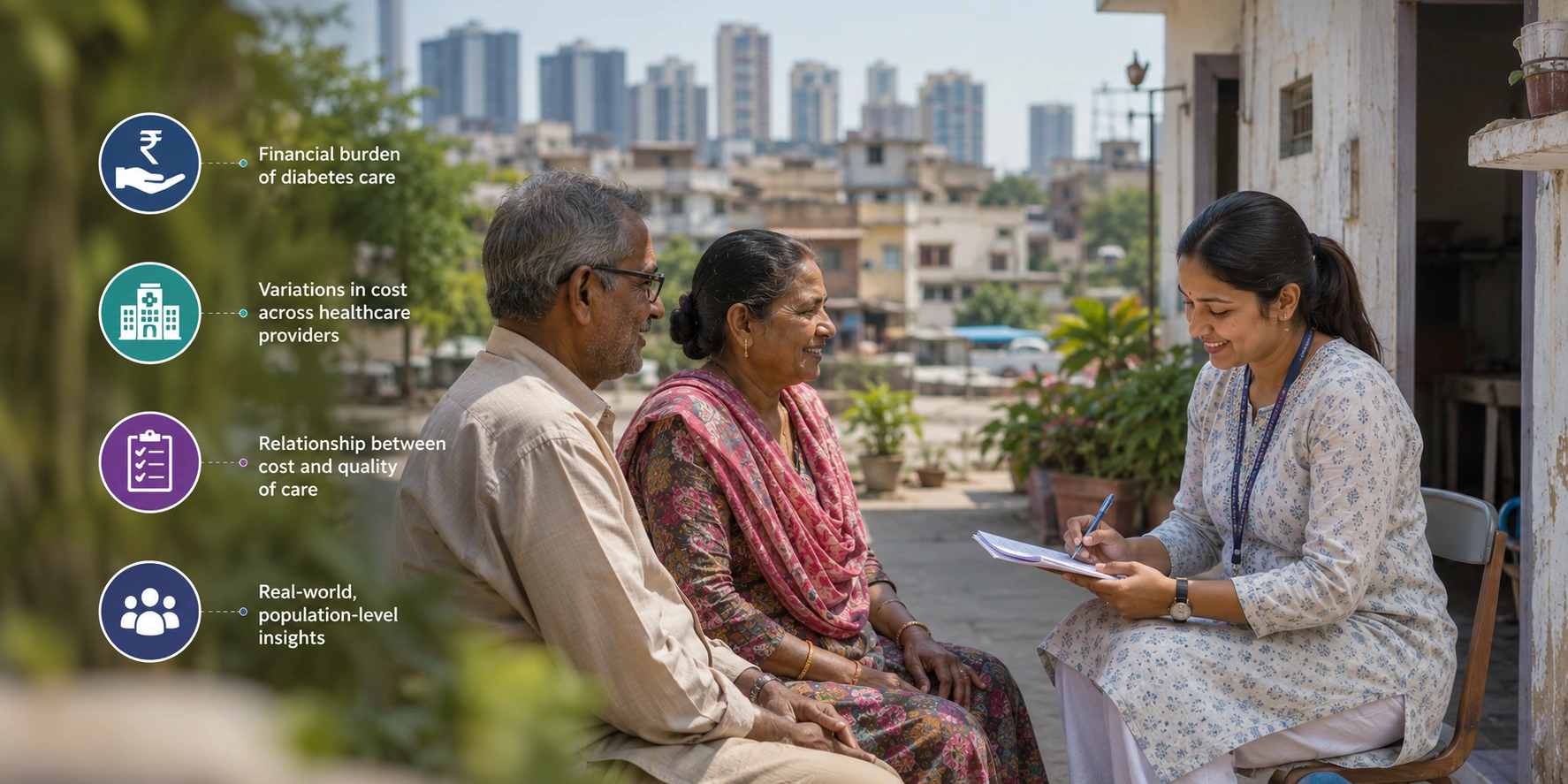
The DEDICOM-II study is a large-scale, community-based research initiative designed to evaluate the direct out-of-pocket expenditure (OOPE) associated with ambulatory diabetes care in Delhi. Unlike traditional hospital-based studies, this research captures a real-world, population-level perspective, including individuals across socio-economic groups and care pathways.
The study provides critical insights into:
It offers one of the most comprehensive and representative assessments of diabetes-related expenditure in an urban Indian setting.
The Problem

Diabetes is one of the fastest-growing public health challenges globally, with India at the center of this epidemic.
However, beyond clinical management, a critical but underexplored challenge is the financial burden borne by patients.
Key gaps include:
These challenges make it difficult to design healthcare systems that are both affordable and equitable.
Objective
The study aims to generate robust, real-world evidence by:
The objective is to inform policy decisions and health system improvements for better chronic disease management.

Study Design & Methodology
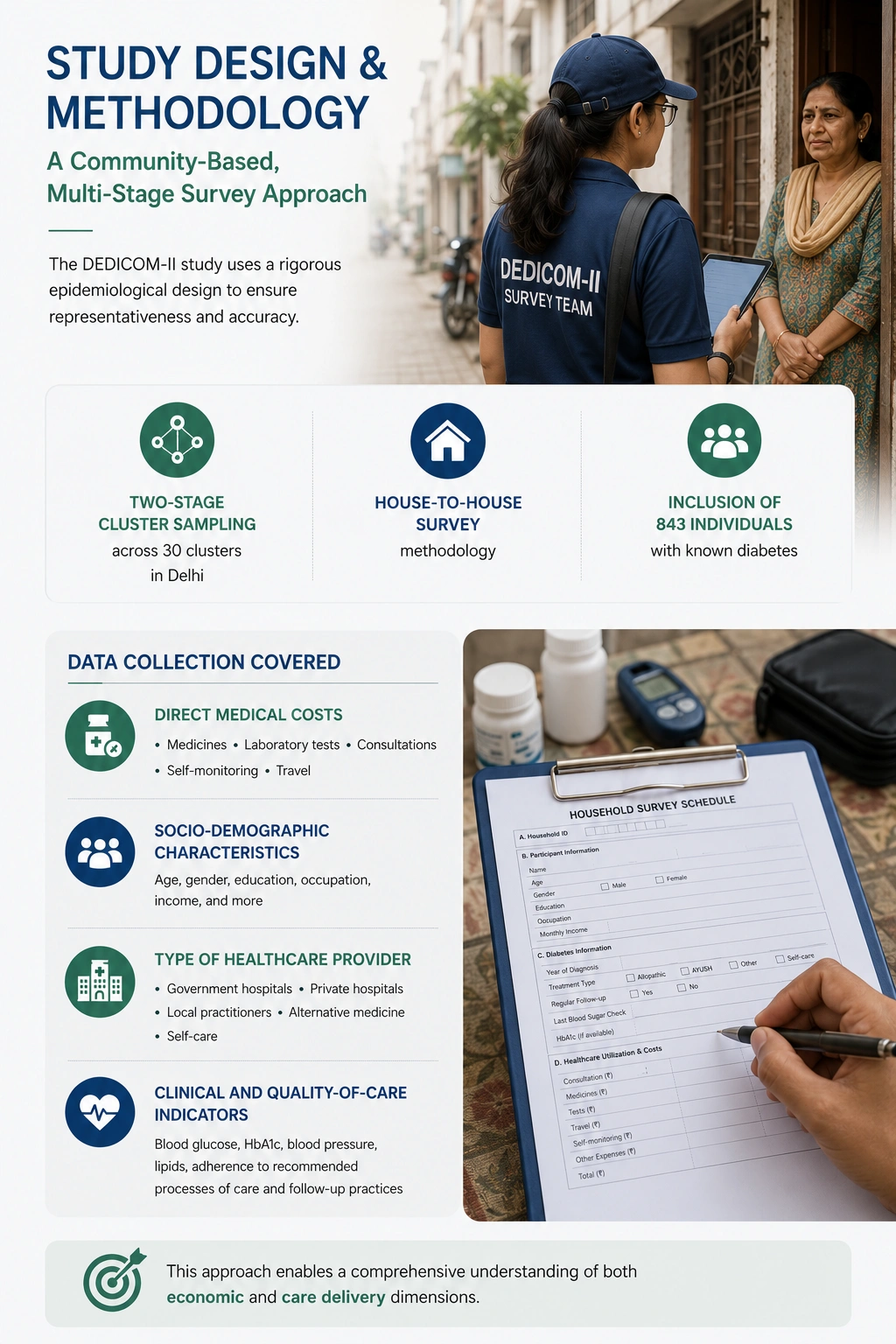
The DEDICOM-II study uses a rigorous epidemiological design to ensure representativeness and accuracy:
Data Collection Included:
Direct medical costs:
Type of healthcare provider:
This approach enables a comprehensive understanding of both economic and care delivery dimensions.
Intervention:
This study does not introduce a clinical intervention but instead evaluates existing patterns of diabetes care and expenditure across different healthcare pathways.
It analyzes:
By studying real-world systems, the research highlights structural inefficiencies and inequities in diabetes care delivery.
Outcome Measures:
1. Economic Outcomes
2. Clinical & Care Outcomes
Key Findings
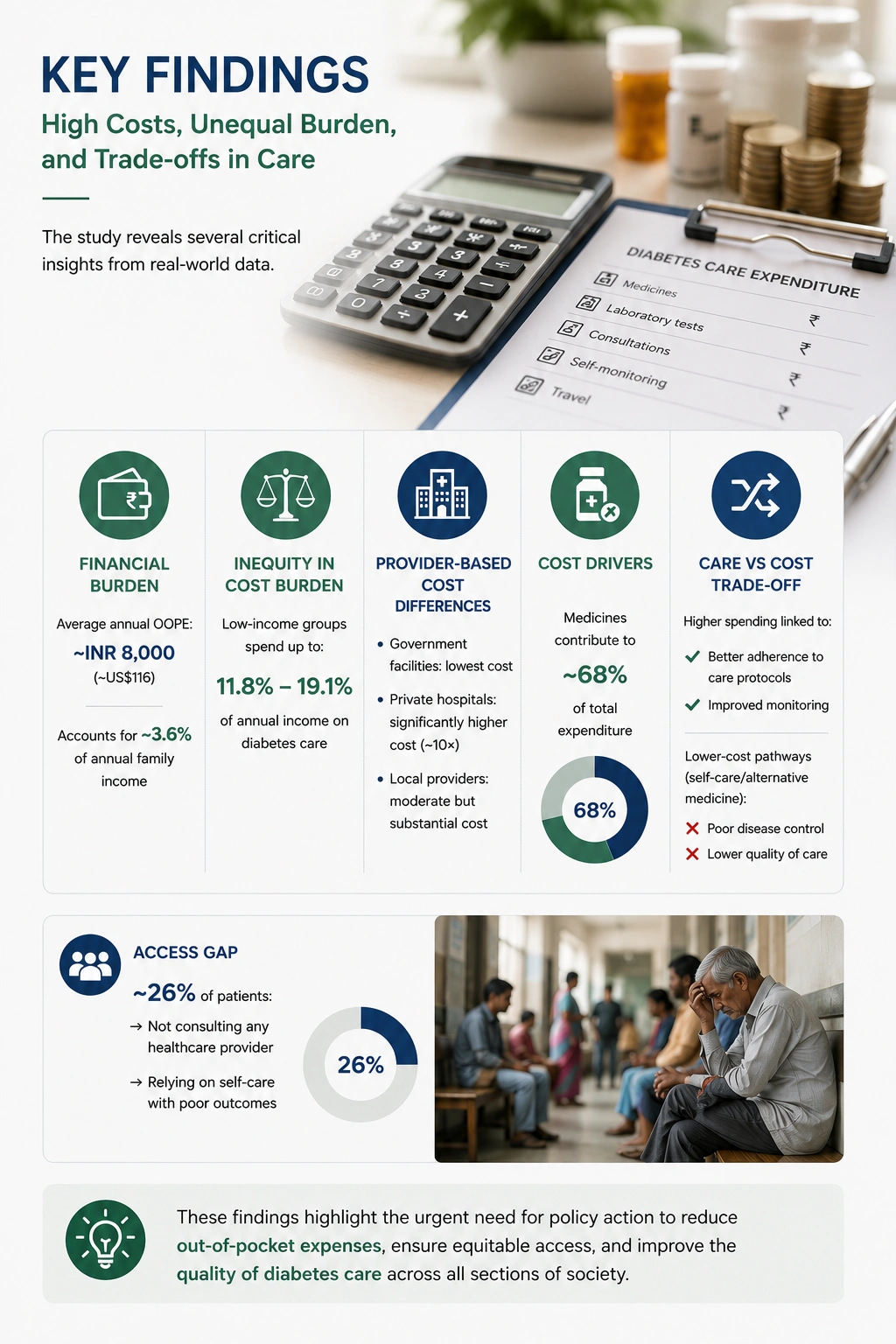
The study reveals several critical insights:
Financial Burden
Inequity in Cost Burden
Provider-Based Cost Differences
Cost Drivers
Care vs Cost Trade-off
Access Gap
Impact
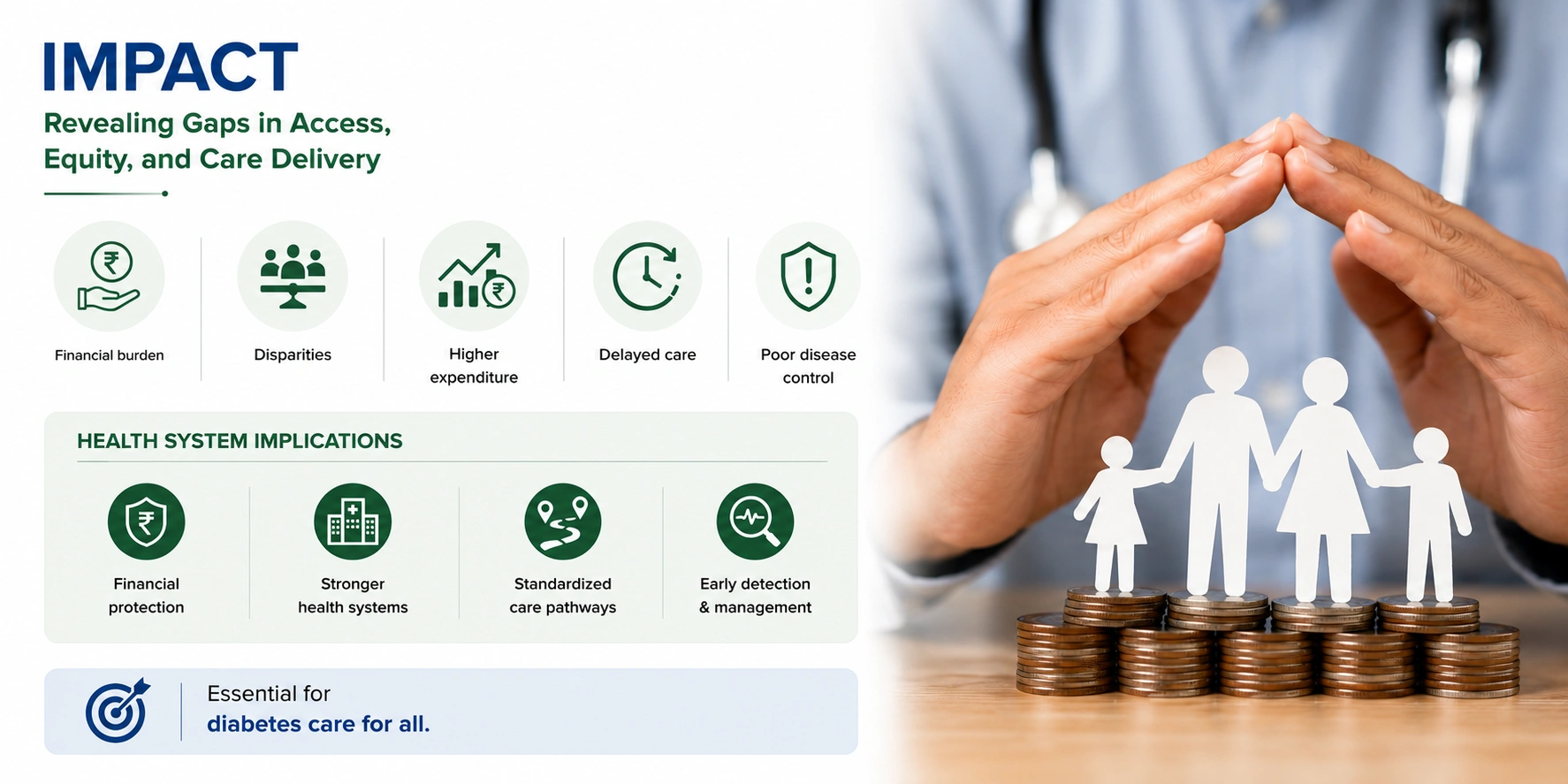
The findings highlight critical system-level challenges:
Delayed or inadequate care leads to poor disease control
Health System Implications
Highlight
Diabetes care in urban India imposes a disproportionate financial burden on the poor, where better quality care often comes at a higher cost
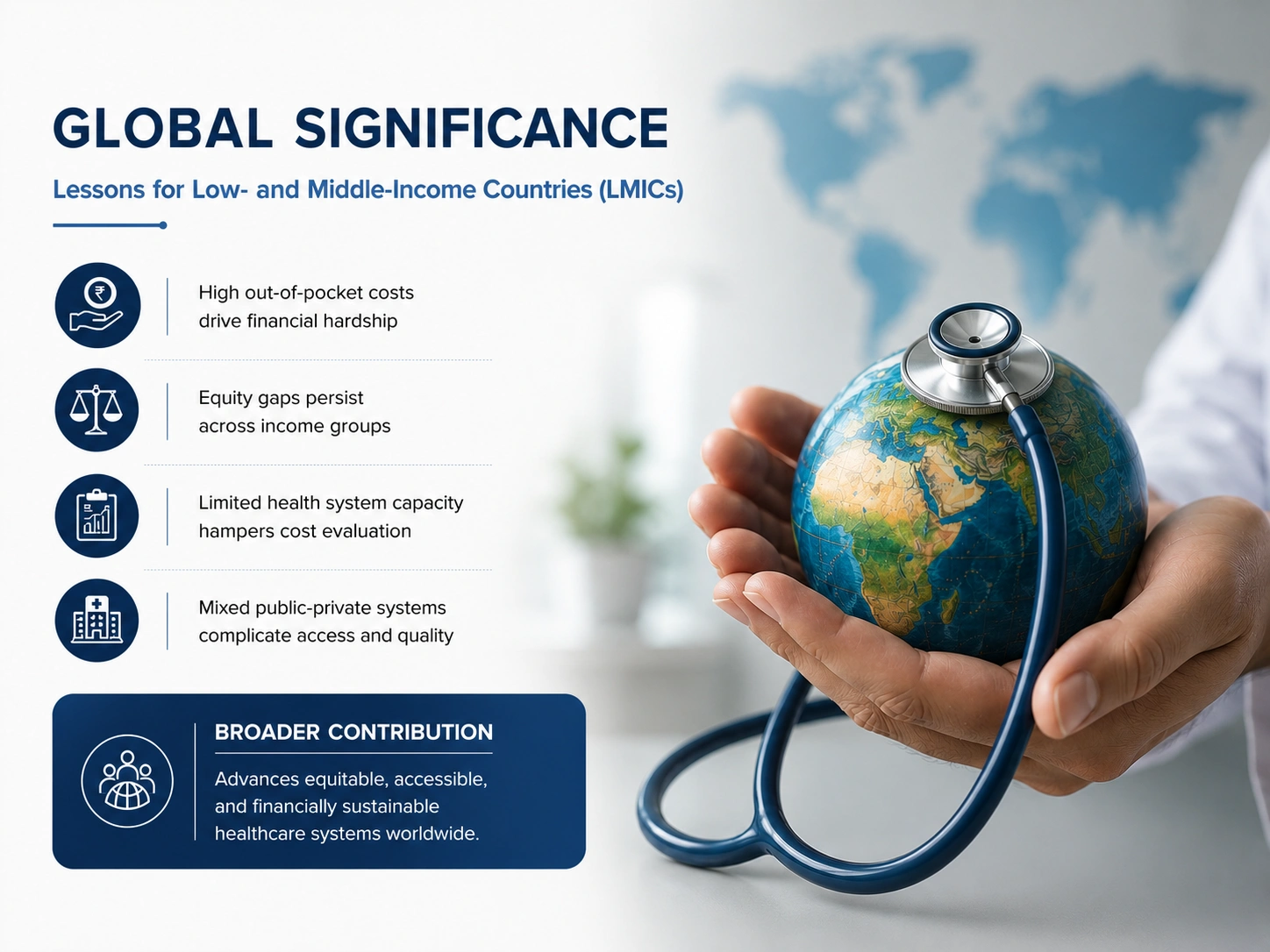
Global Significance
The study provides valuable insights for global health systems:
Highlights the challenge of high out-of-pocket expenditure in chronic diseases
Demonstrates the need to balance affordability and quality of care
Provides a framework for community-based cost evaluation
Relevant for countries with mixed public-private healthcare systems
Supports the global shift toward equitable, accessible, and financially sustainable healthcare systems

This study was conducted by researchers from:
Sitaram Bhartia Institute of Science and Research (SBISR), New Delhi
The team brings expertise across:
Their work focuses on generating real-world evidence to improve healthcare delivery and equity.
Out-of-pocket direct cost of ambulatory care of type 2 diabetes in Delhi: Estimates from the Delhi Diabetes Community-II (DEDICOM-II) survey
This peer-reviewed study provides representative, real-world evidence on diabetes care costs and their relationship with care quality in an urban Indian setting.

We welcome collaborations with:
Collaborate with us to design, scale, and evaluate digital health solutions that transform maternal and child health outcomes across communities and geographies.
