
Projected Cardiovascular Risk in
Diabetes Patients in Urban India
Real-World Evidence on Long-Term Complications, Risk Burden, and Opportunities for Prevention
Scroll
Real-World Evidence on Long-Term Complications, Risk Burden, and Opportunities for Prevention
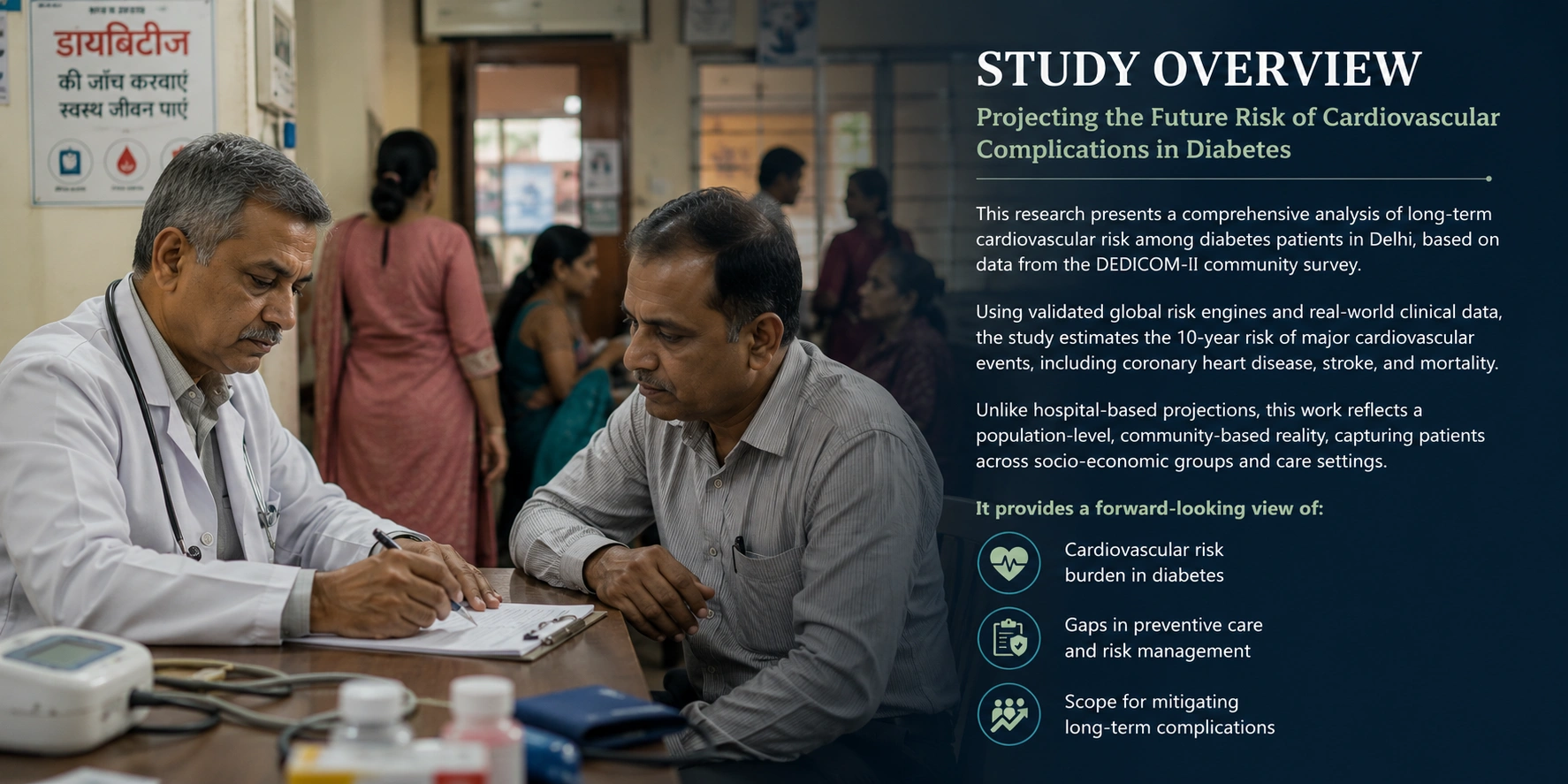
Study Overview : DEDICOM
This research presents a comprehensive analysis of long-term cardiovascular risk among diabetes patients in Delhi, based on data from the DEDICOM-II community survey.
Using validated global risk engines and real-world clinical data, the study estimates the 10-year risk of major cardiovascular events, including coronary heart disease, stroke, and mortality.
Unlike hospital-based projections, this work reflects a population-level, community-based reality, capturing patients across socio-economic groups and care settings.
It provides a forward-looking view of:
The Problem
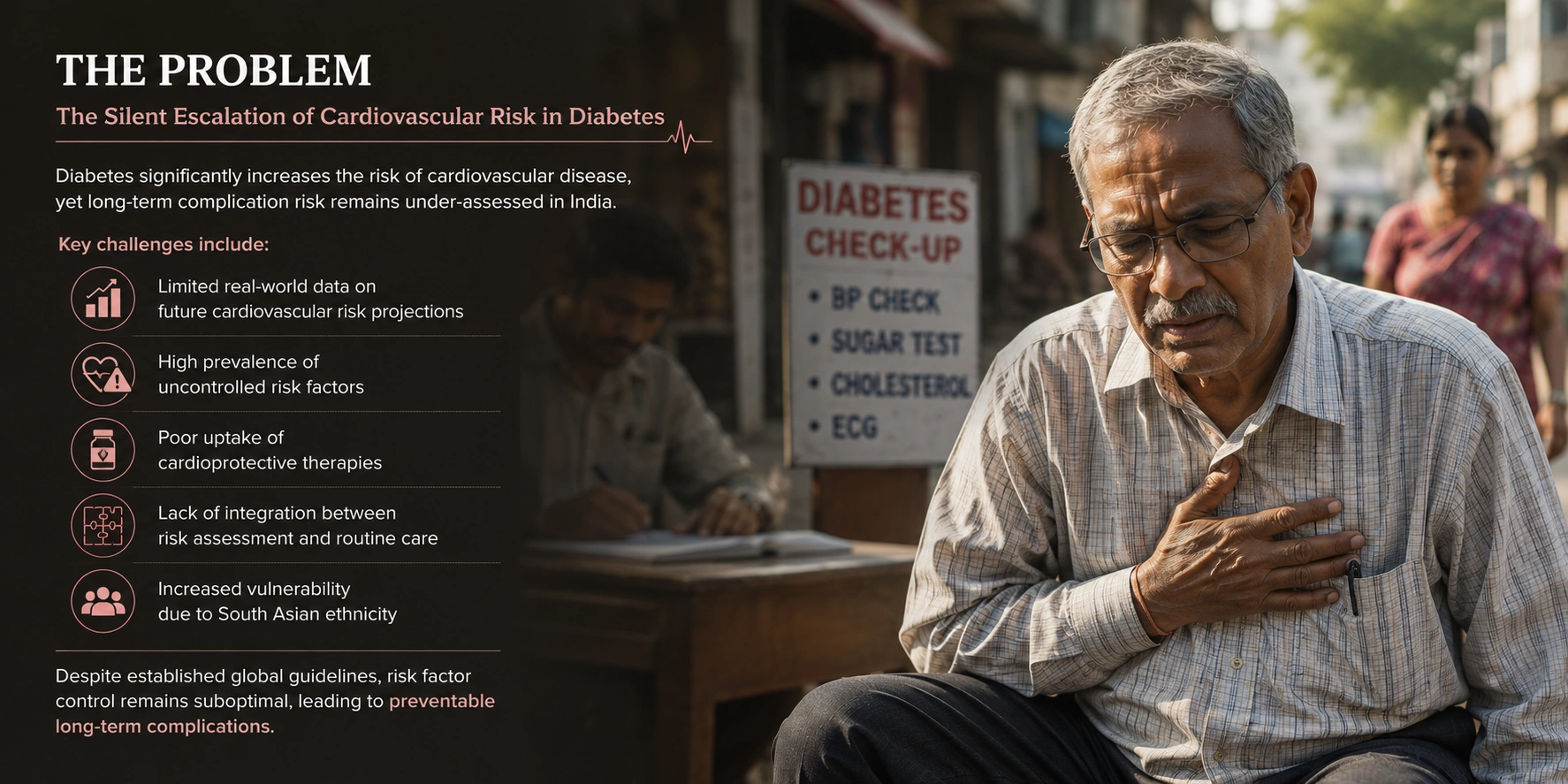
Diabetes significantly increases the risk of cardiovascular disease, yet long-term complication risk remains under-assessed in India.
Key challenges include:
Despite established global guidelines, risk factor control remains suboptimal, leading to preventable long-term complications.
Objective
The study aims to:
The objective is to provide actionable insights for clinical practice and public health strategy.

Study Design & Methodology
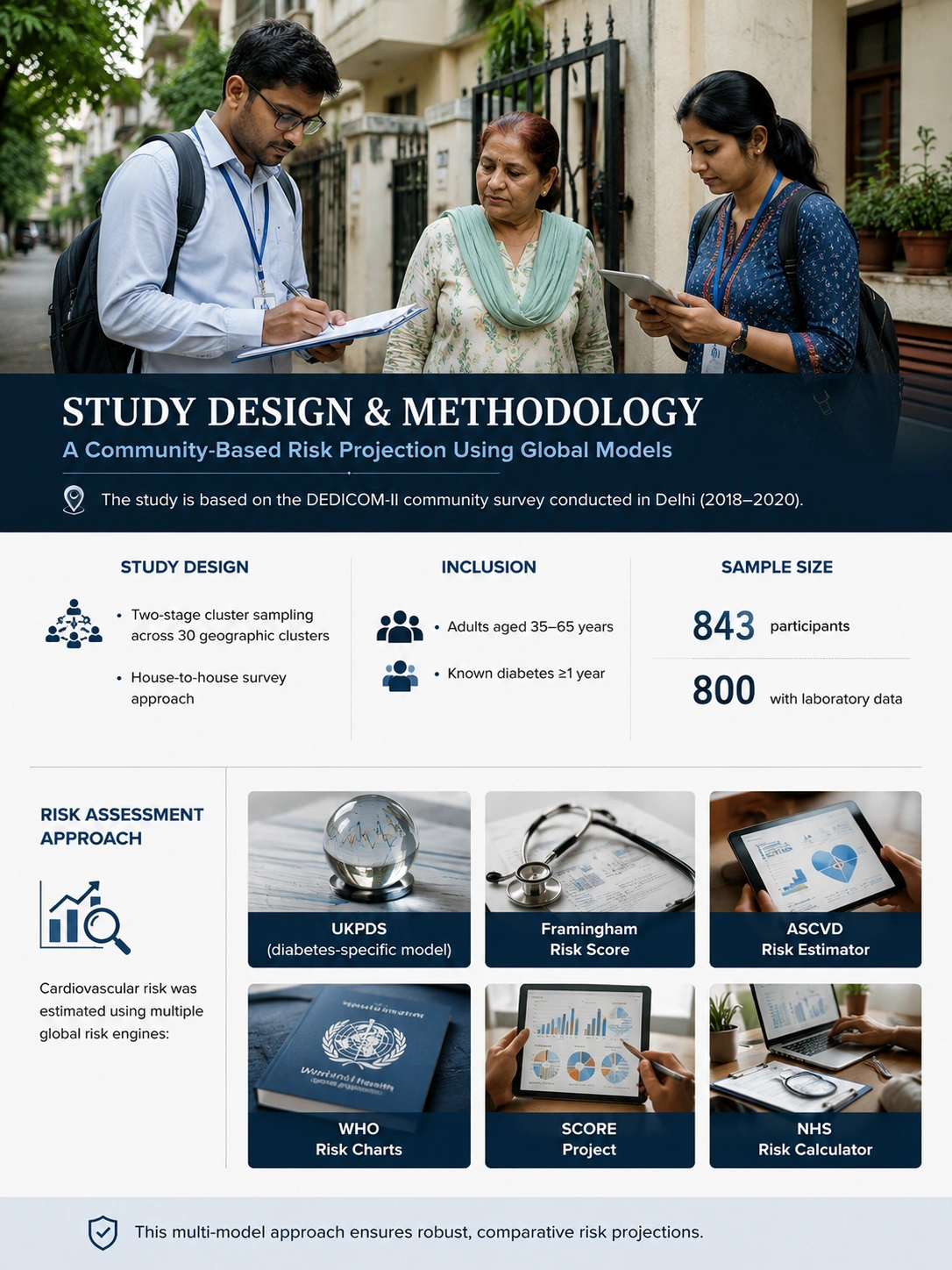
The study is based on the DEDICOM-II community survey conducted in Delhi (2018–2020).
Study Design:
Data Collection Included:
Risk Assessment Approach:
Cardiovascular risk was estimated using multiple global risk engines:
This multi-model approach ensures robust, comparative risk projections.
Intervention:
This study is a risk modeling and projection exercise, not a treatment intervention.
It evaluates:
By studying real-world systems, the research highlights structural inefficiencies and inequities in diabetes care delivery.
Outcome Measures:
Primary Outcomes
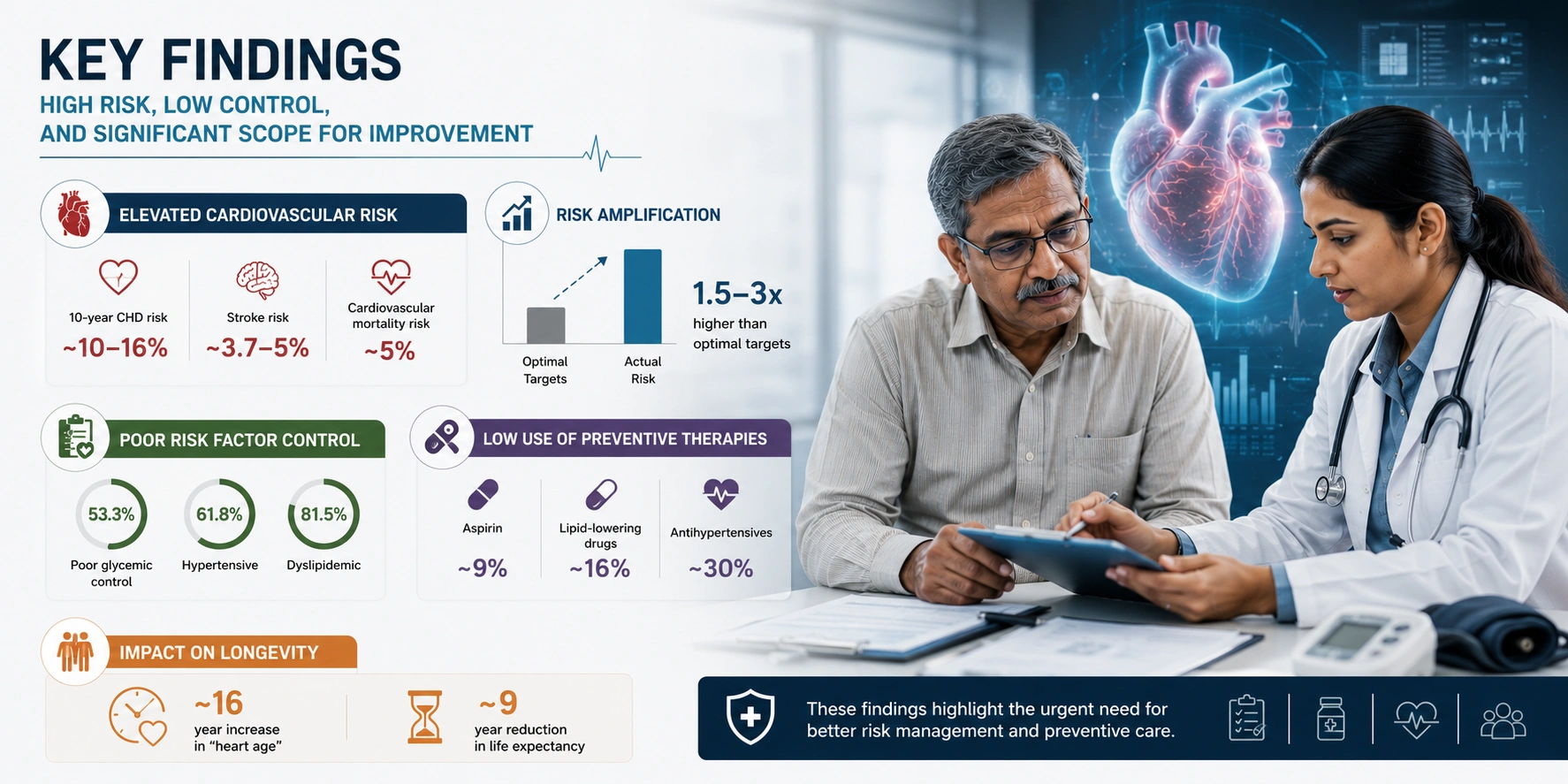
Key Findings
The study reveals a concerning risk profile:
Elevated Cardiovascular Risk
Risk Amplification
Impact on Longevity
Poor Risk Factor Control
Low Use of Preventive Therapies
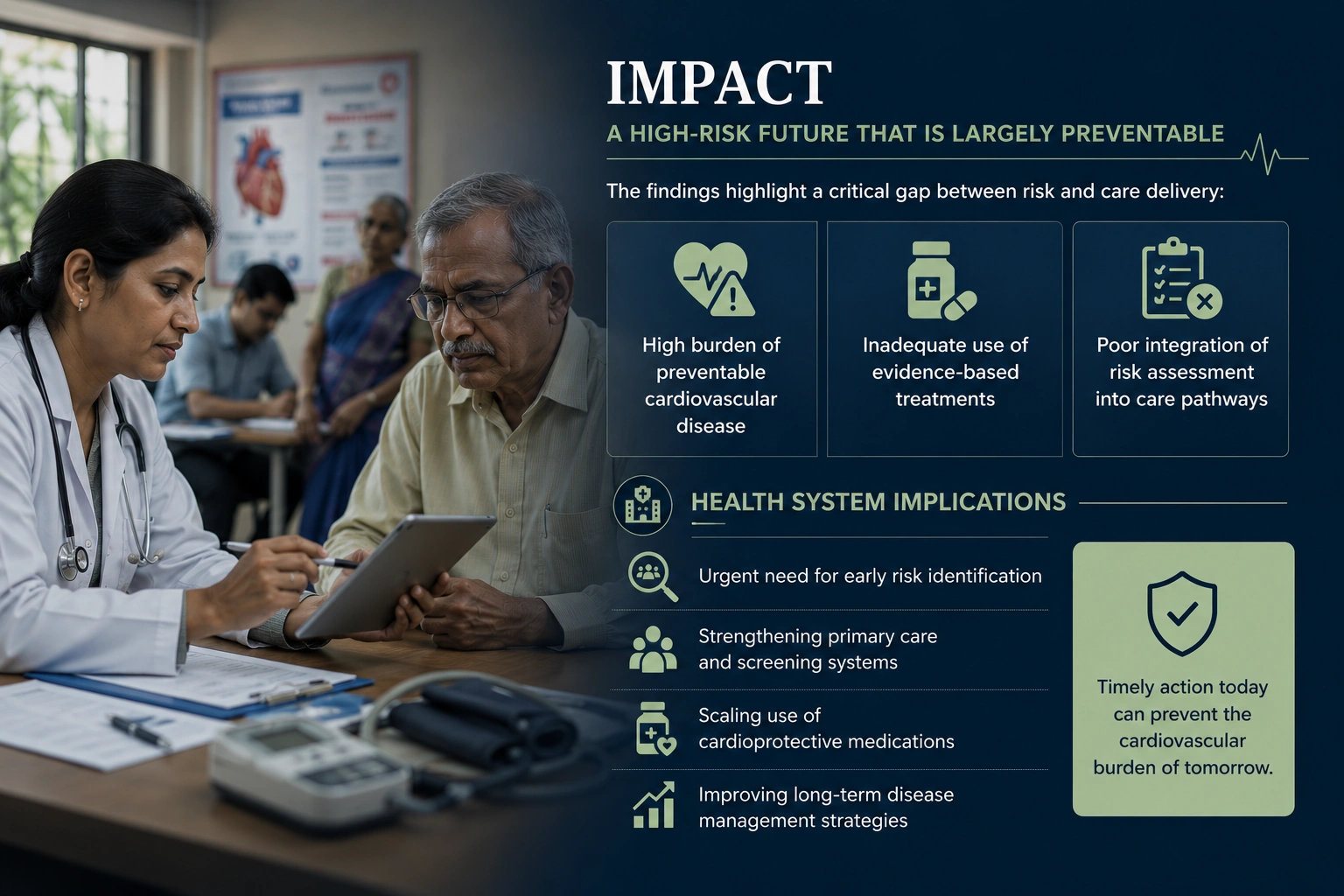
Impact
The findings highlight a critical gap between risk and care delivery:
Health System Implications
Highlight
Diabetes patients in urban India face up to 3× higher cardiovascular risk—much of which is preventable with better care
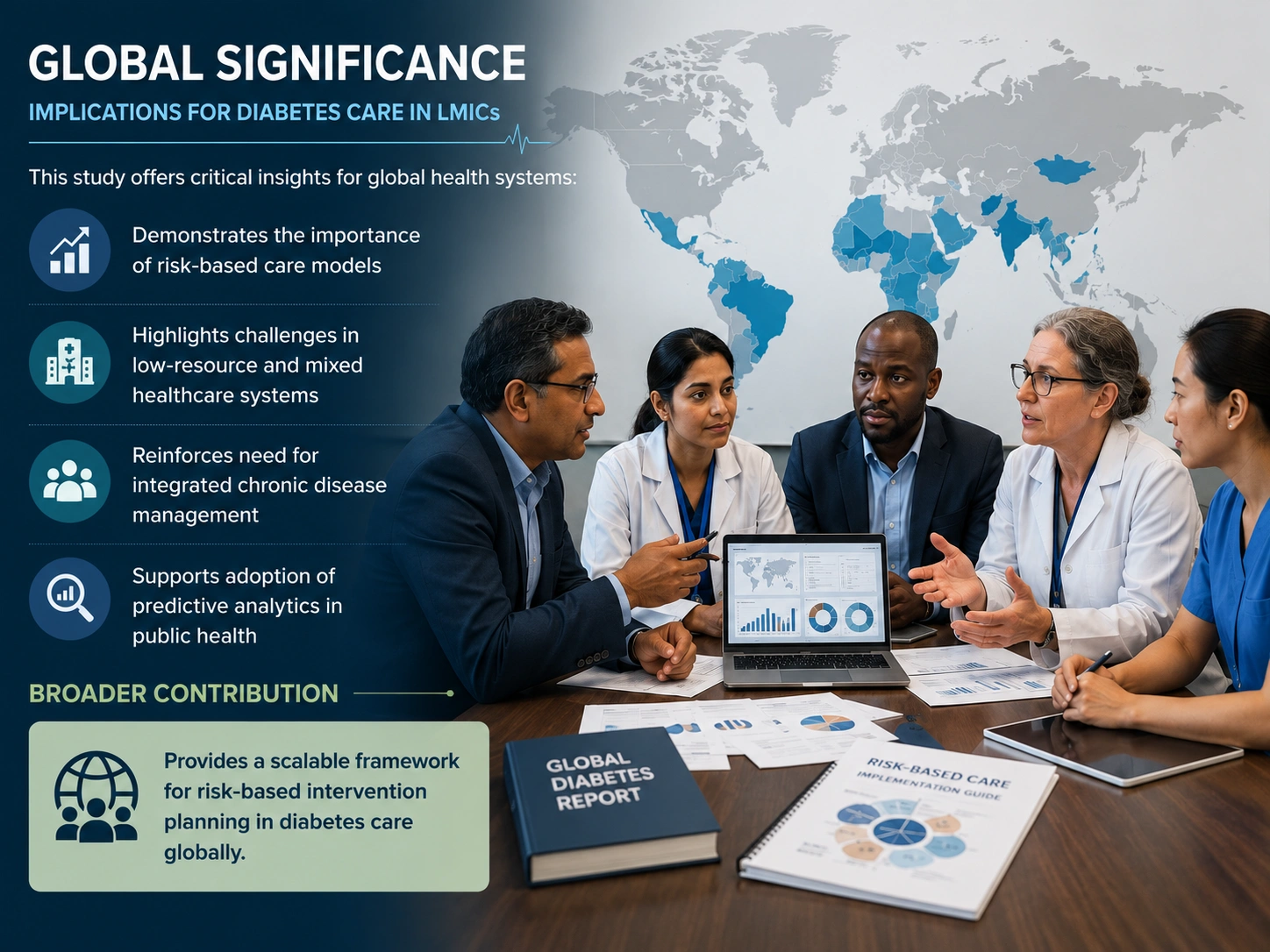
Global Significance
This study offers critical insights for global health systems
Demonstrates the importance of risk-based care models
Highlights challenges in low-resource and mixed healthcare systems
Reinforces need for integrated chronic disease management
Supports adoption of predictive analytics in public health
Provides a scalable framework for risk-based intervention planning in diabetes care globally

This research was conducted by the team at: Sitaram Bhartia Institute of Science and Research (SBISR), New Delhi
TThe team specializes in:
This is a peer-reviewed, internationally indexed journal, lending strong scientific credibility to the study and its findings.

We welcome collaborations with:
The DEDICOM-II cardiovascular risk study underscores a critical reality—a large proportion of future cardiovascular events in diabetes patients are preventable with timely, evidence-based care.
